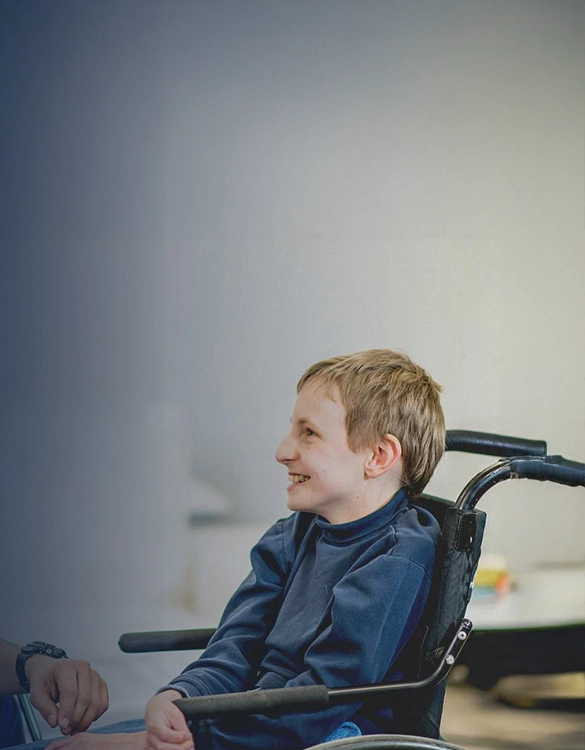
Spinal Muscular Atrophy (SMA) is a rare neuromuscular disorder and a leading genetic cause of infant mortality. It is estimated that, worldwide, spinal muscular atrophy affects an estimated 1 in ~10,000 individuals. Spinal muscular atrophy type I is the most prevalent form, accounting for approximately 50% of all cases. Types II and III are also relatively common, while Types 0 and IV are rare.1
SMA causes progressive muscle weakness as a result of losing motor neurons in the spinal cord and brainstem. Despite its severity, outcomes for SMA have drastically improved in recent years due to early diagnosis and timely intervention.
Research shows that starting treatment before symptoms appear can significantly improve motor milestones and survival rates. 2 This makes early genetic diagnosis not just a clinical recommendation but a potential lifesaver.
Overview
SMA is an autosomal recessive genetic disorder caused primarily by aberrations/deletions in the telomeric copy of the SMN gene, known as SMN1 (Survival Motor Neuron 1) gene. This gene is crucial for producing the SMN protein, which is essential for motor neuron survival.
A loss of or dysfunction in SMN1 results in the degeneration of motor neurons, leading to muscle wasting and weakness. While SMA affects people of all ethnicities and sexes, its carrier frequency is high globally. When both parents are carriers, there is a 25% chance their child will have SMA. These recurrence risks deviate slightly from the norm for autosomal recessive inheritance because about 2% of affected individuals have a de novo SMN1 pathogenic variant on one allele; in these instances, only one parent is a carrier of an SMN1 variant.3
There are four major types of SMA, which differ in age of onset and severity:
- Type 1 (Severe): Present at birth or within the first six months, accounting for about 60% of cases. Without treatment, it is often life-limiting.
- Type 2 (Intermediate): Symptoms emerge between 6 and 18 months. Affected children can sit but not walk unassisted.
- Type 3 (Mild / Kugelberg-Welander): Onset is after 18 months. Walking is generally achieved, but progressive weakness develops over time.
- Type 4 (Adult-onset): This rare form manifests in the mid-30s, causing mild weakness.
Early detection is critical, especially for Type 1 SMA, where rapid motor neuron loss can happen within weeks of birth.
Symptoms and Causes
The hallmark symptom of SMA is progressive muscle weakness, which can appear differently depending on the type of SMA. Here are the symptoms of different types of Spinal Muscular Atrophy (SMA):
- SMA Type 0: Severe weakness and hypotonia, possible heart defects and facial diplegia (paralysis), lack of reaction to stimuli, failure to achieve any motor milestones.
- SMA Type 1: Extreme weakness with severe hypotonia, difficulty breathing, sucking, and swallowing, and inability to sit unassisted.
- SMA Type 2: Able to sit unassisted but unable to stand or walk independently, muscle weakness is predominantly proximal (closer to the body’s centre), especially affecting lower limbs, and respiratory complications are a constant threat.
- SMA Type 3: Able to stand and walk, but may lose these abilities later, gradual muscle weakness, and risk of loss of ambulation in adolescence or adulthood, development of foot deformities, scoliosis, and respiratory muscle weakness.
- SMA Type 4 (Late-Onset SMA): Patients achieve all motor milestones and maintain ambulation throughout life, but may show mild muscle weakness.
Breathing and swallowing problems are common in severe forms due to weakness in the respiratory and bulbar muscles.4
Spinal muscular atrophy (SMA) encompasses several less common forms, including SMA with respiratory distress (SMARD), SMA with progressive myoclonic epilepsy (SMA-PME), distal SMA, SMA with lower extremity predominance and spinal and bulbar muscular atrophy (Kennedy’s disease), each resulting from different gene variants and varying inheritance patterns (autosomal dominant, autosomal recessive, or X-linked recessive).
Causes: The Role of SMN1 and SMN2
SMA is caused by homozygous deletion or mutation of the SMN1 gene on chromosome 5q135. Without a functional SMN1 gene, cells must rely on SMN2, a nearly identical gene that produces only small amounts of functional SMN protein because of alternative splicing.
The number of SMN2 gene copies plays a crucial role in the disease’s severity:
- Fewer SMN2 copies lead to earlier onset and more severe symptoms.
- More SMN2 copies lead to a milder presentation and improved prognosis.
Diagnosis and Tests
An early and accurate diagnosis is vital for SMA because treatment outcomes are most favourable before symptoms appear.
Genetic Testing
Genetic testing can confirm a diagnosis by identifying SMN1 deletions or mutations. Some of the most popular methods include:
- NGS based amplicon sequencing of SMN1 gene to detect variants in the coding region of the gene.
- MLPA (Multiplex Ligation-dependent Probe Amplification), which detects SMN1 and SMN2 copy number changes
The turnaround times for these genetic tests from top labs like MedGenome are typically 14 – 21 business days.
Carrier Screening
This is recommended for individuals with a family history of SMA or for couples planning a pregnancy. It is an essential test because carriers are typically asymptomatic.
For pregnant individuals with a family history of SMA, prenatal genetic testing can determine if the fetus has the condition.6 These tests include:
- Amniocentesis: Performed after the 14th week of pregnancy, this test involves a doctor taking a small amount of amniotic fluid from your belly to be analysed for SMA.
- Chorionic Villus Sampling (CVS): This test can be done as early as the 10th week of pregnancy. A provider takes a small tissue sample from the placenta to be examined for SMA.
Management and Treatment
The last decade has transformed the way medical professionals approach SMA treatment. Once thought to be untreatable, SMA now has multiple FDA- and EMA-approved therapies that target the root genetic cause.
1. Disease-Modifying Therapies
These therapies directly address the lack of the Survival Motor Neuron (SMN) protein, which is caused by mutations in the SMN1 gene. They work by either increasing functional SMN protein levels through modifying SMN2 splicing or by replacing the faulty SMN1 gene.7
- Nusinersen (Spinraza®): Approved by the FDA in 2016, Nusinersen is an antisense oligonucleotide administered intrathecally, directly into the spinal fluid. It works by promoting the inclusion of exon 7 in the SMN2 mRNA transcript. It has been shown to improve motor function and survival across all SMA types.
- Onasemnogene abeparvovec (Zolgensma®): This is a gene replacement therapy approved for children under two years old with bi-allelic SMN1 mutations. Zolgensma is particularly beneficial for presymptomatic or early symptomatic infants, as it can effectively halt or reverse motor neuron loss.
- Risdiplam (Evrysdi®): Risdiplam is an oral small molecule that modulates SMN2 splicing to increase full-length functional SMN protein. It can cross the blood-brain barrier and is approved for adults and children two months and older.
2. Emerging Therapeutics
Several promising therapies are in clinical development, with the goal of either enhancing SMN protein levels or improving muscle function.
One example is Scholar Rock’s Apitegromab, which targets myostatin activation to promote muscle growth and is currently under FDA priority review. Other therapies include next-generation SMN2 splicing modifiers and combination approaches currently being tested in clinical trials.8
3. Supportive and Multidisciplinary Care
Pharmacologic treatments are complemented by multidisciplinary supportive care to improve quality of life and manage complications:
- Physical Therapy: Aims to maintain mobility, prevent contractures, and support muscle strength through tailored exercises, including aquatic therapy.
- Occupational Therapy: Focuses on enhancing daily living activities, prescribing adaptive devices like walkers and wheelchairs, and recommending home modifications.
- Respiratory Care: Provides non-invasive ventilation and cough-assist devices to address respiratory muscle weakness, a major complication of SMA.
- Nutritional Support: Manages feeding and swallowing difficulties; a gastrostomy tube may be necessary.
- Speech Therapy: Helps to support communication and swallowing function.
- Orthopaedic Interventions: Includes surgical correction for scoliosis and contractures when appropriate.9
Surgery may be necessary for severe musculoskeletal deformities like scoliosis or hip dislocation. In advanced cases, other interventions, such as a gastrostomy for feeding and respiratory support, are also part of the management plan.
Prognosis and Outlook
The prognosis for SMA has changed dramatically. Historically, Type 1 SMA led to a life expectancy of less than two years without intervention.10 Now, clinical trials show that children treated presymptomatically can sit, stand, and even walk independently.
For milder types (Types 2–4), life expectancy can be near-normal, although physical limitations may persist.
Key factors influencing prognosis:
- Age at diagnosis (earlier is better for outcomes)
- SMN2 copy number
- Timing of therapy initiation
- Quality of supportive care
Conclusion
Spinal Muscular Atrophy is a life-altering condition, but it is no longer the devastating, untreatable disorder it once was. The combination of early genetic diagnosis, newborn screening, disease-modifying therapies, and multidisciplinary care can dramatically alter the course of the disease.
If there is a family history of SMA, or even if there isn’t, carrier screening is recommended. We emphasise the importance of consulting a genetic counsellor to help families interpret test results, understand associated risks, and make informed decisions.
For clinicians, policymakers, and families, the message is clear: Catching SMA early saves neurons, and saving neurons changes lives.
FAQs
Can SMA be diagnosed prenatally?
Yes, prenatal genetic testing is possible. Procedures like amniocentesis (after 14 weeks) and chorionic villus sampling (CVS, as early as 10 weeks) can check if a fetus has SMA.
How to care for a child with SMA?
Care is multidisciplinary, including physical, occupational, and speech therapy. It also involves respiratory and nutritional support, as well as using adaptive devices to manage symptoms and improve quality of life.
What questions should we ask healthcare providers about SMA?
Ask about the SMA type and prognosis, available treatments, necessary supportive care, clinical trials, and the risks for other family members. Also, inquire about financial and emotional support resources.
Are there new treatment breakthroughs for SMA?
Yes, there have been major breakthroughs. Recently approved therapies like Spinraza, Zolgensma, and Evrysdi target the genetic cause, significantly improving patient outcomes, especially with early intervention.
References
- Spinal muscular atrophy: MedlinePlus Genetics. (n.d.). https://medlineplus.gov/genetics/condition/spinal-muscular-atrophy/#frequency
- Cooper, K., Nalbant, G., Sutton, A., Harnan, S., Thokala, P., Chilcott, J., McNeill, A., & Bessey, A. (2024). Systematic Review of Presymptomatic Treatment for Spinal Muscular Atrophy. International Journal of Neonatal Screening, 10(3), 56.
https://pmc.ncbi.nlm.nih.gov/articles/PMC11348213/
- Prior, T. W., Leach, M. E., & Finanger, E. L. (2024, September 19). Spinal muscular atrophy. GeneReviews® – NCBI Bookshelf. https://www.ncbi.nlm.nih.gov/books/NBK1352/
- Signs and symptoms of Spinal Muscular Atrophy (SMA) – diseases | Muscular Dystrophy Association. (2025, July 9). Muscular Dystrophy Association. https://www.mda.org/disease/spinal-muscular-atrophy/signs-and-symptoms
- Keinath, M. C., Prior, D. E., & Prior, T. W. (2021). Spinal Muscular atrophy: mutations, testing, and clinical relevance. The Application of Clinical Genetics, Volume 14, 11–25.
https://pmc.ncbi.nlm.nih.gov/articles/PMC7846873/
- Spinal Muscular atrophy (SMA). (2025, June 2). Cleveland Clinic. https://my.clevelandclinic.org/health/diseases/14505-spinal-muscular-atrophy-sma
- FDA-Approved Therapies for Spinal Muscular Atrophy | MedRAC@UNC. (n.d.).
https://medrac.web.unc.edu/2025/03/spinal-muscular-atrophy/
- Study details | A study to evaluate how Apitegromab works in subjects who are less than 2 years old and have spinal muscular atrophy | ClinicalTrials.gov. (n.d.). https://clinicaltrials.gov/study/NCT07047144
- Parsons, J., MD, Brandsema, J., MD, & Mpt, T. D. P. (2025, May 29). The importance of supportive care for patients living with SMA. AJMC. https://www.ajmc.com/view/the-importance-of-supportive-care-for-patients-living-with-sma
- Park, H. B., Lee, S. M., Lee, J. S., Park, M. S., Park, K. I., Namgung, R., & Lee, C. (2010). Survival analysis of spinal muscular atrophy type I. Korean Journal of Pediatrics, 53(11), 965.
https://pmc.ncbi.nlm.nih.gov/articles/PMC3012277/