



Category: Oncology
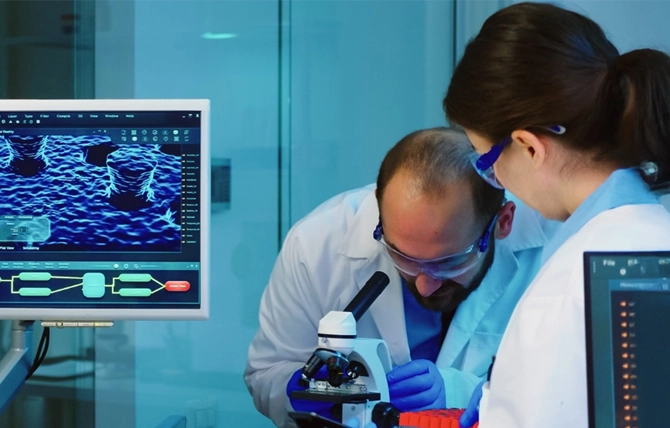
NPM1-MRD Detect: Redefining Precision Monitoring in NPM1-Mutated AML
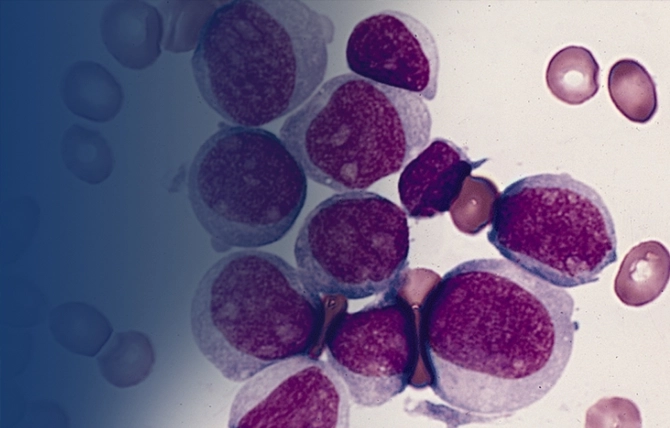
Changing Face of Lung Cancer Diagnosis: Why Genomic Testing is Now Essential

What Are Ovarian Cancer Causes at Young Age?

Is Breast Cancer Hereditary? Understand the Role of Family History in Breast Cancer Risk

Symptoms of Ovarian Cancer You Shouldn’t Ignore

Medgenome’s CNS Tumour Methylation Classifier – A Breakthrough In Brain Tumour Diagnostics

5 Most Common Cancers in Men

Not ‘Cancer Survivors’ but ‘Cancer Challengers’

Clarity at different Stages
It is a well-known fact that genetic testing is a lens that helps the clinician look at the cancer more closely. It is the clarity that genetic testing provides that helps the patients in different ways, may it be hereditary risk prediction even before the cancer has hit an individual or in the differential diagnosis, prognosis and therapy selection at an early stage or therapy monitoring and disease surveillance for relapse post the initial therapeutic steps.
Growing awareness of hereditary breast and ovarian cancer (HBOC) in India has led to a significant increase in the adoption of BRCA1/BRCA2 testing and hereditary cancer gene panel testing in recent years. While these tests can help guide treatment decisions, one of their most important applications is identifying inherited genetic variants that may increase an individual’s lifetime risk of developing certain cancers. Though some look at this as an unrequired knowledge, others pull their socks up and start preventive measures right up-front and be on high surveillance. This is the stage we have an upper hand over cancer in this head-to-head fight.
When it comes to early-stage cancer, what genetic testing provides in terms of clarity is the differential diagnosis, prognosis (to understand whether the cancer will be aggressive or not), and therapy selection, all having an application on the cancer management steps a clinician would take. An accurate differential diagnosis helps select a proper course of action, an accurate prognosis prediction helps a clinician understand the extent of aggressiveness of the treatment, whereas some gene mutations are indicative of which exact therapy to choose to combat cancer.
Routinizing Genetic Tests
While clinicians have increasingly started amalgamating genetic tests in their practices, there is a major portion of patients who are not aware of the broad applications of genetic testing. Being aware, sure, will be a first step towards changing the term ‘survivor’ to ‘fighter’.
Comprehensive Tumor Gene Panel: Experience of a Cancer Survivor

Shivani Mehra (name changed) couldn’t have asked for a more fulfilling life. A loving husband, two amazing kids, a successful job as a financial consultant, supportive family and friends, she had everything and much more. All that changed shortly after her 40th birthday, when she noticed some of the early signs of an impending storm. A battery of tests later she was diagnosed with lung adenocarcinoma, a type of non-small cell lung cancer and the most common type of lung cancer among non-smokers.
Shivani’s oncologist Dr. Verma (name changed) quickly realized that time was not a luxury for her and ordered molecular and immunohistochemistry (IHC) tests to determine course of treatment. Since EGFR gene mutation by RT-PCR method and ALK and ROS-1 expression by IHC test turned out to be negative, he ruled out targeted therapy and decided on conventional chemotherapy. Unfortunately, her conditioned kept worsening as her tumor progressed. The Mehra family eventually realized that their perfect life was never going to be the same and hoped for a miracle.
Dr. Verma decided to give another shot at targeted therapy and sent her biopsy tissue to MedGenome Labs Ltd for a comprehensive tumor gene panel test. This next generation sequencing based test that allows screening of variations across 175 genes associated with response or resistance to specific targeted therapies in various types of cancer, revealed a rare neurotrophic tyrosine receptor kinase (NTRK3) gene fusion. NTRK gene fusions are known as oncogenic drivers and treatment of patients carrying NTRK gene fusion mutations is achieved by first generation tyrosine receptor kinase (TRK) inhibitors which are associated with high response rate. Dr. Verma facilitated the procurement of the targeted drug. Shivani’s family finally breathed a sigh of relief as she responded well to the drug and is now slowly but steadily progressing towards recovery.
With the advancement in molecular medicine, understanding of pathology of life-threatening diseases has expanded and a combination of information available through research and technology has revolutionized genomics-driven therapeutic approaches in various diseases including cancers.
MedGenome Labs Ltd offers a wide range of molecular tests that help to determine genomic profile-based targeted therapy and helps to assess prognosis and treatment to patients at baseline, progression or recurrence.
Shivani doesn’t dread the inevitable anymore, the days of uncertainty have been overcome. She is thankful to her doctor for his guidance and perseverance, to the molecular test that changed the course of action and to the access to life saving medicine, all of which turned out to be game-changers for her.
Every cancer survivor has a story to narrate – a story of pain, precariousness, panic and of empathy, solidarity, resolve, hope and gratitude. And every survivor’s story restores the faith that there is light at the end of dark tunnel.


