Sickle cell disease affects millions worldwide, yet isn’t talked about often enough. This inherited haemoglobin/red blood cell disorder can be caught early and managed better with a little more awareness of the condition.
What Is Sickle Cell Disease?
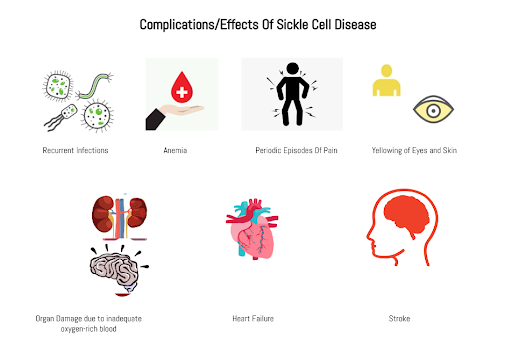
Sickle Cell disease affects the haemoglobin in the red blood cells of the body, causing the cells to appear C or sickle-shaped. These red blood cells are sticky and hard. They struggle to pass through narrow blood vessels causing blood flow to be affected. People with the condition also experience a constant shortfall since these cells die early (in 10 to 20 days, compared to 90 to 120 days of normal cells). As a result, there are a host of issues that you may need to learn to cope with.
Living With Sickle Cell Disease: The Challenges
Sickle cell disease if left undiagnosed or untreated could cause complications you’re best off avoiding. Thankfully, treatments exist that can reduce the risk of more severe complications and/or ease symptoms when they do occur. Bone marrow and blood transplants are the only cures for this condition. However, medicines can help manage pain and lower the risk of infections, among other things.
Sickle cell disease is more common in certain populations, including individuals of Indian, Middle Eastern, African, Asian, Mediterranean, and Hispanic ancestry. In these groups, or when there is a family history of the condition, carrier screening and genetic testing can help assess the risk of inheriting or passing on the disease. Prenatal testing can also be performed using placental tissue or amniotic fluid samples. Young children may be tested for early diagnosis, while adults can undergo a simple blood test to determine whether they carry the sickle cell trait or an abnormal haemoglobin gene.
Genetic Testing for Sickle Cell
Sickle cell disease runs in families and is an inherited trait. This makes genetic testing a vital piece of the puzzle.
MedGenome offers simple hassle-free testing for sickle cell disease. The Sickle cell anemia (HBB) gene analysis (exon 1) – and the HPLC- Sickle Cell Anemia test(to check the type of haemoglobin present in your blood) can tell you whether you are at risk of passing on the condition to your future children and if you have sickle cell disease yourself. Optional genetic counselling can be invaluable in charting those next steps before you work out the best way forward in consultation with your doctor.
As with many genetic conditions, early awareness can make a significant difference. Whether you are considering carrier screening before starting a family or newborn screening after your baby is born, timely testing can provide valuable information to support informed healthcare decisions.
To provide the best experiences, we use technologies like cookies to store and/or access device information. Consenting to these technologies will allow us to process data such as browsing behavior or unique IDs on this site. Not consenting or withdrawing consent, may adversely affect certain features and functions.
Functional
Always active
The technical storage or access is strictly necessary for the legitimate purpose of enabling the use of a specific service explicitly requested by the subscriber or user, or for the sole purpose of carrying out the transmission of a communication over an electronic communications network.
Preferences
The technical storage or access is necessary for the legitimate purpose of storing preferences that are not requested by the subscriber or user.
Statistics
The technical storage or access that is used exclusively for statistical purposes.The technical storage or access that is used exclusively for anonymous statistical purposes. Without a subpoena, voluntary compliance on the part of your Internet Service Provider, or additional records from a third party, information stored or retrieved for this purpose alone cannot usually be used to identify you.
Marketing
The technical storage or access is required to create user profiles to send advertising, or to track the user on a website or across several websites for similar marketing purposes.